Tuesday, December 20, 2016

Importance of high speed broadband for business

We thought we'd share a little internet speed secret with our readers...

Our office has some of the fastest broadband in Australia. In fact we moved to our current office because we could get the full throttle, pure fibre optic broadband offered by our suppliers.

Truth be told we hunted around for months to find an office premise that had the full fibre deal that our National Broadband Network (NBN) was offering in our area.

Yes it flies faster than a speeding bullet, leaps tall buildings with a single bound and is indeed more powerful than a locomotive. Super Man stuff really. Though it is in more subtle ways where the unexpected dividends lie.

Our full fibre connection has enabled us to run a series of fully operational trial servers. Nothing transactional or world beating of course.  Though this allows us to experiment with new web based technologies of all sorts by getting our hands dirty.

We also can run internal only servers that open up for resources from outside occasionally. Showing a potential client a new concept or feature for example. The added bonus is we don't need to keep talking to our secure server house people before we need to and we like occasionally just playing with the servers.

We also run a streaming video server of the view outside our office. Which happens to be quiet spectacular much of the time. We run that though a YouTube Channel and stream a local radio station for those that want to stare out the window on their screen.
Here it is, for those that wish to watch.


Another advantage of all this capacity is that we can share it with our clients and colleagues. They drop into the offices when they need to get move seizable things around the internet. It's no skin off our nose due to our unlimited plan. It's great to have a reason to catch up with them while they're here, we talk about new ideas and motivate each other in various ways.

More than occasionally we are swamped by people that come in to use our super fast internet. When nearby internet connections go down or go slow we attract 'internet refugees', sometimes a dozen or more. Again it's a pleasure, we have the space and more often than not we benefit from the goodwill and ideas exchange that happens. In fact we sere featured on the national ABC News Program 7.30 report recently. Here it is, quiet amusing really, underlining a few issues with the national broadband infrastructure.

 ABC 730 report

All of this fun and games doesn't mean much if the connection was not reliable. It is fortunately, as a result it's become more than a business resource, it's become a utility, an advantage and something I wish all of my fellow businesses will be blessed with in the not so distant future.

A very merry Christmas period, may you be blessed with ever faster and more reliable internet.


Wednesday, September 14, 2016

VR and Drones : New Business Photography

Of the digital mega-trends one is the internet is becoming increasingly visual.  Whether it's through the media of Instagram, Snapchat or emojis, all appeal to our seemingly endless fascination with pictures.

It should then be no surprise that there is a constant arms race to visualise the business that you do. We've covered previously Infographics if you're in the business of sales or statistics. Though many businesses are what I would call location based businesses; restaurants, cafes, car dealerships, hotels, galleries, markets, music venues, gyms and sporting venues etc. All of these rely, at least in part on their location to function.

We held a business seminar that demonstrates the benefits of these new opportunities.


I know though experience that creating great visual assets is a challenging task for most businesses. Everything from logos to videos are a major undertaking, as they require a good deal of thinking and a good producer to make them look professional enough to pass muster in today's visual landscape.

This is where new Business Photography comes in!

The use of internal 360 Virtual Reality and Drone Photography offer fresh, interesting and above all useful images for most location based businesses.

Below is an example of an indoor climbing venue. You'll agree this really works in showing off their business. Click and drag the image around to take a VR tour. Amazing really.


From the outside you can also capture fantastic drone footage and create a series of stunning visuals that illustrate your location in relation to the landscape. This example is also very powerful.

I really love this - click through for an even more amazing example of this image.


Click to access the 360 animation - image thanks to Bravo Drones 


Tuesday, April 26, 2016

Quality not Quantity the key to Social Media success

As of today I have exactly 17,309 subscribers/followers/friends/colleagues over my various social media networks. These are personal, business, and organisational accounts. Many more if we count account pages and organisations I share administration rights.

So what? So what indeed!

Of course this is nothing compared to a particular young person I know. He has 10s of thousands of connections, so many I gave up years ago even talking social network numbers. One video post alone spurred nearly a million views and 1000s of comments that lead to equal amount of subscribes/likes/follows over the various networks. Of course this young person doesn't sell anything, it's a profiling game that strokes the ego very nicely.

If on the other hand your job is selling products/services/ideas the question of raw numbers is much less important. Numbers should be just the start of your strategy. It is in fact the type/sort of people you should be most concerned about. In other words the 'quality' of your connections.

As the image below illustrates certain people are much more influential in connecting with other people than others. Imagine if the central message here was a recommendation to subscribe to a particular news service. Imagine now that you have received a message from a trusted associate recommending the news service. Emotionally and statistically you are approximately 10 times more likely to take up that same recommendation than a cold recommendation from a random/unknown source. Let that sink in for a while.

Quality networks are more important than the raw numbers
One of the best tactics I use is to conduct an audit of your social media networks. Rank people and organisations into relevance for categories. Divide these into logical communications groups and start becoming more relevant to more people over night. Your contacts will reward you with a smile because "Quality Rocks!" .

Tuesday, December 8, 2015

Make 2016 the year The Cloud works for you

We've heard so much about Cloud Computing over the last 4 years that this weird term has quickly become a part of our vernacular. Everything digital is increasingly "in the cloud".  How can we make it work for us?


Your photos are likely on Apple's photo storage site, your address book is up there too, via your phone. Gee even your relationships and private opinions are most likely archived in FaceBook's cloud for you.

If you think about it all of this has kind of happened without us making much of a decision about it.

Perhaps it's now time to do a little thinking about "The Cloud" and what you want in it, what you don't want in it and how it could work for you.

The most obvious advantages of the cloud are the ability to access your work from anywhere with an internet connection. The other being your ability to be able to share your work with others.
Both these features of cloud computing open up a world of flexibility in how a business works.

You can easily have people work from home or outsource a task to someone by giving them access to your cloud systems for the period of their engagement. This alone can vastly reduce costs.

Cloud systems are however very reliant on reliable broadband connections that are fast and inexpensive. While this is available to many people, it is still an issue for many locations. Fortunately most cloud systems now have phone apps that allow you to do your business on your phone.

One of the most robust and useful of cloud systems is now called Google Apps for Work - This is very similar to Google's free versions delivered through gmail. The difference is you can operate all through your own domain name instead of Google's. You also get a higher storage capacity for documents in this paid version.

The pricing is reasonable at between $10-15 per month per email account. Which is very similar to Microsoft's own cloud app offering.


Wednesday, October 28, 2015

Build a Local broadcast TV station via YouTube & WireCast

Live local broadcast IP TV channel.

Thirty years ago I was part of trying to start a local TV station. The idea was sound, the business plan was tight and we had local advertisers ready to go. Though one thing got in the way, the licencing fee from the government was so high it locked us out of the market.

In those days Australia had essentially 4 TV channels and few more regional and experimental channels. The commercial channels were so profitable and so popular there was a buzz about even being invited into their offices. It was in effect a protected industry with legislation and procedures to keep competition out. It was in other words not going to happen.

Fast forward 25 years and the world has changed in on major way, the Internet is now everywhere and bandwidth is increasing with every year that goes. All of which makes the streaming of video a viable and realistic option for most people.

We've been Researching and Developing a new business model for 16 months. We've trialled a series of production tools and broadcast options. More importantly we've worked with existing high quality content producers to fully aggregate and re-broadcast quality content in a format available to 85% of the population. We've called the project Gigabitcity.tv We think you'll agree, a new era of local, high quality content production and broadcast is now within reach.

Here is the result: A fully aggregated news and information service with the ability to schedule pre recorded content and stream live news, weather and other shows as it is deemed appropriate.

Broadcast can be accessed via mobile phones, PCs, tablets and TVs. Public screens in libraries, in shop windows or shopping centres are also possible.

Advertising revenue is catered for through multiple parts of screen realestate. Additional revenue can be generated by design and production of advertisements and specialist programs for public or private viewing.

If you're interested in creating a local of subject specific live broadcast IP TV channel contact us today and we'll walk you through the opportunities.

If you wish to promote of sell the amazing new opportunity for local communities, just pick up the phone and call +61 2 4325862 or email sales@organise.net.au 

Friday, September 4, 2015

Is the Apple Watch the next iPhone?

After a huge fanfare it appears that Apple's much hyped Apple Watch has gone with the wind. Google, Garmin and many others have been quick to launch or relaunch their smart watches to the world.

"Our fans all aspire to having one"

Yet a recent visit to a city Apple store revealed an incredible interest in Apple Watch. "Our fans all aspire to having one" said one of the blue shirted Apple Geniuses. He's right the word "aspire" seems apt. Not everyone I spoke to could justify the cost of between $500 and $1500+, depending on their fashion sense and bank account.

Apple's Watch is an aspirational purchase - CCommons
With so many 'aspirations' Apple has planted a powerful seed in the mind of millions of people around the world. It would only take a killer app to turn those aspirations into purchases.

So all Apple has to do is wait for some of the multitude in the developer community to come up with the apps that will spark the imagination. There are many apps already here and many more coming through the pipelines every week. Some of the best are apps are really useful to have on your arm. We love some of the following:
London Bus and Tube tracker - Apps that estimate when your transport will arrive, brilliantly useful.
Runtastic - is one of many fitness trackers that are actually very useful when on your wrist.
AirBnB - has made a splash with their Apple Watch App, adding even more convenience to an incredible service.
Evernote - has a great app that adds your wrist to it's incredibly useful note taking cloud software.

The killer app has not yet come, it will. When it does Apple will reap huge rewards in the same way it is still for it's game changing iPhone.More glam info at Apple Watch web page

If you have an idea for a great Apple Watch app let us know, we may just be able to help you. Contact us for a confidential discussion.


Monday, August 17, 2015

Who’s to blame when artificial intelligence systems go wrong?

Republished via:

Monday, June 29, 2015

Google Maps via MyBusiness

At our recent business event held in Gosford we heard direct from Google executives the importance they place on businesses and organisations registering for Google Maps and by extension mobile access. They advocated the streamlined process called MyBusiness.


The revised process via the MyBusiness registration is incredibly simple. The new MyBusiness process overrides the previous registration that many found complicated and difficult to understand.

Register here

A quick series of questions and a thorough validation process that involves an automated phone call or a postcard sent to your business address will have your business secured.


The result will be a listing similar to that showed above. The most important point is the listing on Google Maps (seen on the right),  opening hours of your business and a click through phone number.
These importance of these listings can not be over estimated. With so many people using Google maps and mobile search features you really need to be there. Don't hesitate, get onboard here: Google.com.au/Mybusiness

Dave Abrahams of OI & Duncan McGrath of Google Aust

Contact Organise Internet for details on how to make the most of this registration process. 

Thursday, May 21, 2015

Google comes to Gosford


We're very pleased to announce that we're bringing Google Australia to Gosford on June 22, in what we think will be a wonderful eye opener for all people involved in business on the Central Coast.

Gosford, Monday, June 22, 9am – 12pm, Central Coast Leagues Club


Topics covered: Adwords, YouTube, MyBusiness, Maps, Mobile, Analytics, Google Trusted Store & future developments.


Expert focus: How to brand, profile, sell, profit and grow via search, mobile, desk top, third party assets. SEOvSEM. 

Assisted account setup: Bring your laptop, tablet and enact registrations, advertising credits and business validations on the day.

Businesses on the Central Coast.  Secure your place. Unique event with guest speakers from Google Australia.

Hosted by: OI Organise Internet a certified Google Partner. Guest speakers are from Google Australia. Event partners; Central Coast Business Review, Central Coast Leagues Club.

Event information and registrations here:

Eventbrite - Google in Gosford - business for growth


Thursday, April 23, 2015

Be Mobile Friendly or Disappear ? Not entirely


There's been much talk about 'Mobilgeddon' and the new Google rankings adjustment that will rank mobile friendly websites higher than sites that don't render well on mobile devices.

The official Google blog in Australia points out that ranking is made up of approximately 200 factors about your website, not just the ability of mobile users to view your website well. Having said that Google will be ranking websites that are mobile friendly higher than those that do not render for mobile phones for mobile searches. Fair enough, I'd certainly like to have a site that is touch screen and thumb friendly when I'm on my mobile. Google is at pains to remind people that these changes won't affect search rankings on traditional computers.


If ranking is a big deal for your business, you're probably already aware of these changes and have completed the transition to a mobile friendly platform. If not, now's the time to get moving. There are two main ways of achieving this: The first is to entirely redesign your website in a what's called a 'responsive' framework. The second is to create a separate site for mobiles and if necessary create a redirect to the mobile site. Google accepts both ways as legitimate. The first method is a bigger job and suits businesses that where going to upgrade anyway. The second is a quick and effective way to maintain your ranking.

Use this official Google tool to check out how mobile friendly your existing site is. Check here.

Despite all this 'formatting' discussion, our experience is that regular, interesting and relevant content is the best way to boost your website's rankings, and Google would say; a little Adwords advertising helps too :)


Wednesday, March 25, 2015

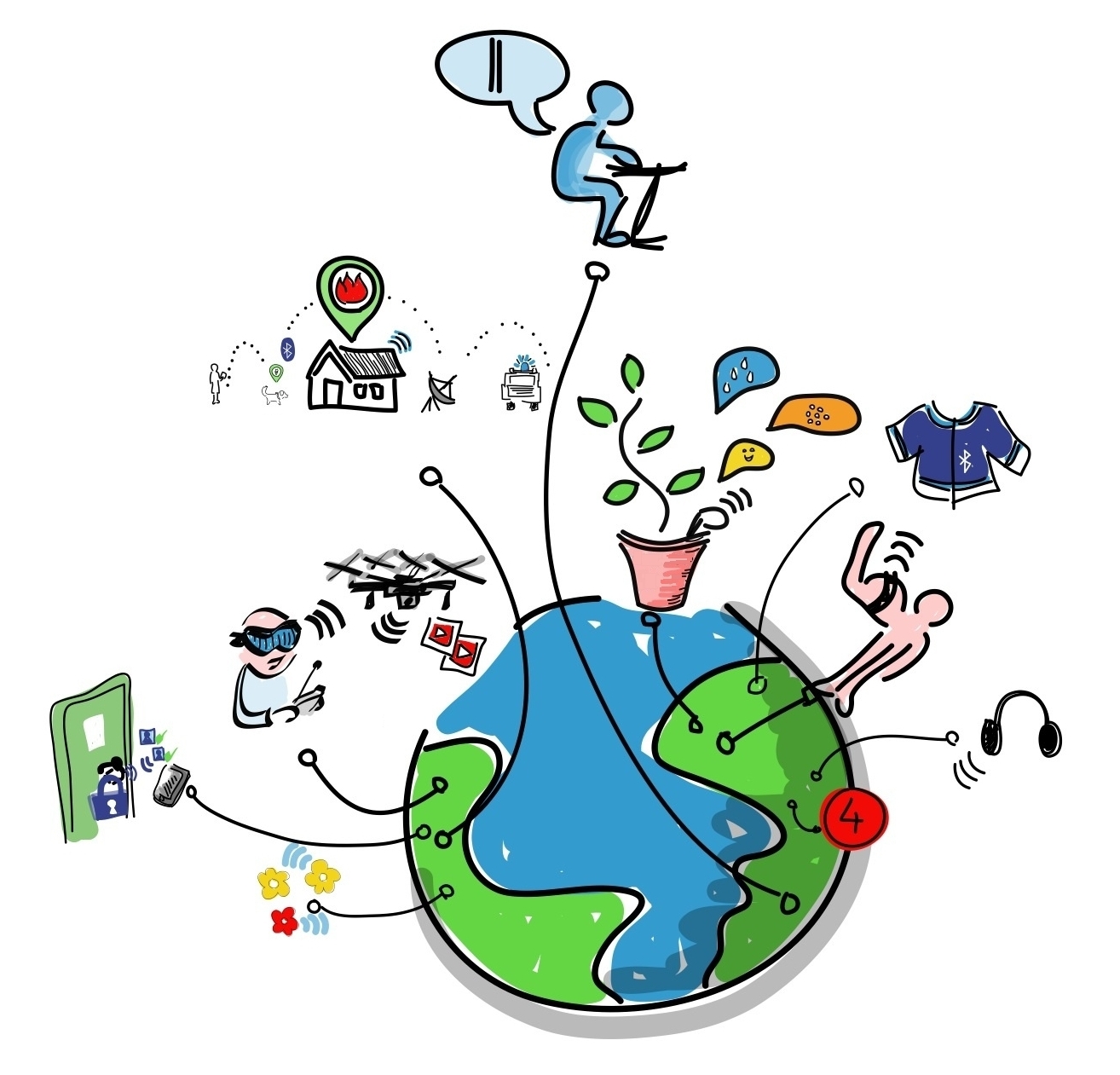
The Internet of Things - you are such a thing

You may have heard a little about The Internet of Things, or not. You will however start to realise that you are one of those things. And those things are many...
The Internet may have been around in it's most basic form since 1969 though it was not until the launch of the World Wide Web and the wide spread use of email that use of the internet became common place. Since then a bewildering set of useful applications and systems have been built on the top of the Internet Protocol or IP for short; mobile apps, interactive maps, smart phones and video streaming to name but a few. IP has been incredibly useful, so useful that we constantly need to revise the expansion of the network and allocate new capacity across the system. It's constantly tempting to think that the growth of the internet is at least slowing down. Social media growth appears to have slowed itself down now.
Wiki Commons licence 
Though each time we assume things will settle down off pops a new popular usage. The latest massive expansion is the internet's takeover of television etc. Services such as NetFlix and YouTube are simply big pointers in a video streaming revolution that is changing entertainment, education and communication industries. TVs are in other words now part of the internet in just same way as phones, computers and gaming consoles.
Though if you stop and observe the Internet landscape you'll see that books (eBook readers), cars (onboard navigation), tickets (electronic transport and entry tickets), toys (networked action figures), credit cards (PayWave systems) are increasingly part of the Internet. All of this on top of an array of identification systems like passports, drivers licences, toll roads and access passes etc. Though too we may realise that our news, sport and entertainment are already deeply part of the internet. Every article you read or view or listen to are on the net and when you consume them your profile is attached to the internet in much the same way as you are tagged in a photo on social media.
Many people are tracking their health and activity using fitness loggers and smart watches, these too connect to the internet.
You may now begin to feel that you are indeed a central part of the internet, though of course all these things that you are connected to don't really need you to work. They talk to each other without you! Your viewing statistics of a particular genre of YouTube cat videos does not need you to inform advertisers to suggest cute products that you are likely to purchase next time you are in the supermarket. This is metadata and it's potential of being used is quiet extraordinary.
In the deep end of The Internet of Things there are particularly more sophisticated things happening than I've mentioned here. Specialised sensors, devices of all sorts and databases are all being connected to each other over the Internet. Indeed if you can imagine a use, it's probably been or being done. Imagine too how you can be part of this evolution.
The Internet of Things has included you some time ago, it maybe time to start wising up to how you may want to include it :)


Tuesday, January 6, 2015

Why search engines are still better than social media

We're all familiar with search engines like Google, Bing, Yahoo or Baidu if you read Chinese. Though Social Media seems to be so much more in vogue. Social interactions and chat are after-all naturally compelling.

Though searching for things is increasingly important in the ever expanding web. Indeed the idea of searching or looking for something has become a necessary part of most modern activities.
Teachers and students 'search' when researching subjects, Journalists 'search' when drafting an article, police search when looking for criminals.  Shoppers 'search' when checking out prices and products. Everyone who's ever been on the internet searches for things, ideas, locations or histories.  Looking around is a natural extension of curious nature.
I like to think of social media as a top level activity, it's wonderful for brand building, customer feedback and research into what competitors are saying. Indeed Social Media is great once you've acquired a customer to keep them engaged with your brand. Though you'll also notice that Social Media platforms are pretty poor at search specific items or companies. Instead it's our collective habit to follow the opinions of friends and some of their associated friends.
Search on the other hand is a validating process for most people. Whether it be a new pair of shoes or and industrial item we are increasingly being active in our research. Geographical searching via Google maps is indeed one of the most popular of Google's search platforms when buying food and larger or more expensive household goods.

Wednesday, November 5, 2014

Gigabit Internet - building the future

Gigabit Cities, Towns & Regions.


Picture a youngster in the future, stooped over a laptop in the back room of a disused shop in a long forgotten country town. Coffee cups, half eaten pastries and the faint smell of last night’s alcohol fills the air. A sad dystopian image so far, but look a little closer.
He’s but one of a dozen people sitting or standing around various bits of old and new furniture. The walls are covered in ultra thin screens, windows into other teams in other parts of the world; China, the US, Norway & Brazil. They’re all working together on something or other, something global, something significantly big. Many languages are being spoken and simultaneously translated in real time. Videos make up part of presentations, audio is being composed to fit, financial documents embedded in the project.
All happening seamlessly, no delays, no pixelation, no distortion no waiting for files to transfer. The sound quality is perfect, the discussion is natural, this is the future of work. And it is entirely built around ultra fast gigabit networks.
All this should not entirely be unexpected, the internet after all has been growing in usage, speed and capacity at an astonishing rate since it became widely commercially available in the early 1990s.


The internet is the backbone of all mobile phone usage, all fixed line usage, increasingly most of radio, TV and movie transmission. Almost all of the worlds financial transactions now occur over the internet and a large part of humanity use it for most of their social and professional communications. Profession after profession is being disrupted and reconstructed in ways that few had seen coming. From education to medicine to shopping and defence, indeed government and governing is slowly being changed by the power of the ubiquitous and always connected world. It is an unstoppable force, fuelled by our collective desire to re-imagine the future in a massively online world. A true wave of change is upon us. Some will ride this powerful wave, others may resist it, others may simply be submerged by it.


It is in this backdrop that a future certainty can be brought into focus. Many opportunities for growth will no doubt be there for those that connect, collaborate and adapt.
One thing is certain though, the faster, more scalable and more reliable our networks are the more opportunities for growth there will be. Gigabit networks will release and liberate wealth, health and wellbeing wherever they are found. In other words the prosperous places of the future will be gigabit enabled cities, towns, regions and nations. It really is that simple and it has started happening now.

Text extract from a speech given to the Fabian Society in Sydney by Dave Abrahams in 2014 - Copyright. Follow the author on Twitter @digitdave
...
Video is a Mashup from the Google Fibre project.

Tuesday, October 7, 2014

Egypt to eBooks - the digital evolution


Like a rising digital tide of change we wonder why? We all know the digital evolution of business and social life is upon us, lapping at our feet. The incredible changes are now too numerous to mention without sounding like platitudes. Though last month's announcements by Apple of their Apple watch device and platform beg the question: How did we get to this 'hyper-evolution' in the digital space?

From Egypt to eBooks

It's not yet a commonly held view, though I believe the digital society started hundreds of years ago. At least with the first printing press and by extension a few thousand years before that in our social desire to trade things; a trade in ideas, goods and services. For example it is relatively straight forward to argue that the great library of Alexandria in Egypt 2300 years ago functioned the same way as today's giant server parks that host millions of databases and websites.

Access back then was for the privileged few who had the right credentials, could travel, read and make sense of the scrolls. Access today is via an internet link at home, at work or at school via a revolutionary interface tool called the world wide web.

The hunger for knowledge has always been there, in hearts and minds of children, women and men. The difference now is, most people can read, most of us now have access to knowledge and most of us don't need to physically travel to get it. Indeed most of us don't need to ask permission from anyone to access it. Together these factors create perfect conditions for people to quench their thirst for knowledge. A thirst that has been with us for millennia.

Today what we experience as digital hyper-evolution is simply an acceleration of access to knowledge. We are in other words just following our natural desire to attempt to understand the world in a hope of making our lives better.

It would appear an adjustment in thinking is well over due if we are to make sense of the rising tide. A tide that is perfectly normal when seen in a historical context.


Monday, July 14, 2014

What's Google My Business ?

Google has launched a bold strategy to get more businesses listed online. This has got to be a good thing, right. There are many out there that really need help. Apparently more the 50% of Australian businesses don't have a website. This is a problem, a problem for everyone really, not least of all the search giant and your business. If Google listings are a problem for your business now's the time to think about this over a nice cuppa tea.

Though at first sip by golly Google is burning the lips of many existing clients. A new interface, automatic upgrades and mixed messaging methods don't help. Highlighting again, how the young recruits at Google lack a little real world experience, particularly of the small business sector.

Of course who could complain, these tools are 'free' after all? Free as in 'free to use', not as in "free beer". Sure it may take you a week to work out and you run the risk of really messing up your listings but stick with it and you'll succeed. (Google recruits take note: Time is the most precious resource for a small business owner - even before an important upgrade).

My Business Image
Google asks "Playing hard to get?" - Many businesses are.
Yet we think it's all worth the effort. The system amalgamation is a natural development in the constantly evolving space of cloud based tools that the big G offer. So what do you get for your effort?

What you get is a simplified and streamlined dashboard for all vital business info; map location, phone numbers, domains, contact hours, services, product categories and the like. The sort of thing that should be available on your website, right? We understand that you may be too busy with clients to make this information handy online. Google have done a lot of the work for you. They've even created  Android and iPhone apps to help you keep everything at your finger tips. Go check it out, you be the judge, grab a cup of tea and contemplate Google My Business, we think you'll be glad you did.


As always if you need a little help, contact a certified Google partner agency. They're trained and motivated to help you get ahead, our listing's below :
A certified Google Partner Agency


Wednesday, June 18, 2014

TimeSlotStudio - We're building a very special broadcast ready studio for you

Creating video in a timely and straight forward manner is still a challenge for most organisations. There are so many considerations; lighting, audio, microphones, makeup and video formats. Not to mention all the camera work and script writing. It's no wonder many professional people find it way too hard to make a serious start.

That's why some of our friends we asked us to build a studio for customers and their clients. The concept we've worked up is "Walk in Walk out" - everything set up, everything ready to use; cameras, audio, lighting and props and broadcast - thanks to our incredibly fast NBN fibre networks.

Digital Dave gives a quick technical test of the studio - 
We've invested heavily in great networks and computers to allow you to broadcast or narrowcast your content in real time. This can be used for a lecture, a lesson or a musical performance. Importantly it can be used to help monetise your productions on a subscription or pay per view basis.

While our technical investments are up and working now, we have a vision of a greater studio. A infused with the 1960 and 1970s - the era of so much change. The era of the birth of the internet, video recording and amazing creativity.

We're commencing our own crowd funding campaign to make our studio something extra special for our partners, customers and their clients.

We've created a broad array of rewards for our crowd funding campaign - from full production series, exclusive T-shirts, and a special 60' / 70's themed cocktail party and much in between.

Get involved in our Pozible powered Crowd Funding program here:
Web: www.organise.net.au/TimeSlotStudio
YouTube:
https://www.youtube.com/user/timeslotstudio
FaceBook:
https://www.facebook.com/TimeSlotStudioTV
Twitter:
https://twitter.com/TimeSlotStudio
Tumblr:
http://timeslotstudio.tumblr.com/
Instagram:
http://instagram.com/timeslotstudio

Come on board - join our mission to give you to best digitally leveraged AV studio on the East Coast of Australia.
Instagram

Friday, May 16, 2014

CEBIT 2014 Digital Business report

Australia’s largest and most respected IT conference and expo CEBIT has morphed from a tech industry meet-up to a true digital business/economy event. This year’s CEBIT conference marked their transformation by moving west from Sydney’s Exhibition centre in Darling Harbour to Homebush the home of the successful 2000 Olympics. The move has re-energised the event, now in its 13th year. A revamped offering over 3 days was more about innovation and facilitating business than just geek tech.


Travelling out to Homebush by car was an unnecessary luxury as the train ticket was included in the entry, ( a nice touch and a vote of confidence in the event from the NSW government). My fellow traveller was a prominent business publisher and he’d just taken charge of a wonderful new car from Mercedes. The car has so much technology crammed into it I quickly became his onboard technology advisor.


Belkin, a Central Coast based company greeted us when entering the substantial expo hall. They were promoting their new range of Smart Home technologies; automated networking of all things electrical in the home/office. The pricing points for these once very expensive items are now incredibly digestible and worth a close look.


Beyond the big company stands there was an impressive array of foreign trade stands from China, Germany, India and the UK. Though it was the crafty New Zealanders from Wellington that had the best pitch to my mind. The aspiring Tech City of Wellington had dragged over a bunch of fun business people to talk up their city and NZ as a whole. A mix of good business data, coffee, food and cheeky personalities was winning people over, me included. Wellington fell short on only one count, fibre optic broadband. Something I bragged Gosford had over them. Of course they quickly replied that they were onto it and a full fibre optic rollout to all premises was well on the way.


The conference side of the event was as thorough as always, with so called Big Data, eHealth, Cloud, Mobility and Cyber Security the main lecture themes. Though Paul Budde’s bite sized info sessions proved most popular. Paul heads a Central Coast based global telecommunications consultancy Budde.com which has become a hallmark of CEBIT Australia over the last decade. His experience from around the world helps frame the Australian version of the CEBIT global franchise.


Close to my heart was a fun new concept this year. As startup’s have been on everyone’s lips this year, CEBIT revamped and expanded it’s fun ‘StartUp Alley’ concept. Almost 100 startup projects were present providing the quirky energy and pizzazz that tech expos usually lack. There was a wide range of new concepts waving their idea flags in the wind, all of whom later competed at a pitch fest event. One of the winners was a mob called MathsSpace, that is evolving the teaching of complex mathematics concepts in a very cool and engaging way. Though most of all the Startup alley bought new faces to the event, many young people of course, though notable were less tech looking experienced old hands and most encouraging many more entrepreneurial women.


An honorable mention to the University of Newcastle who were out in force again with their micro robotics students, a specialisation that the UoN are gaining a global reputation for. Their Nubots program was most popular with the crowd. Nubots are programmable 1 foot high robots that can do many things, among other things play football (watch out CC Mariners).


3D printing exhibitors were there in full force. This technology is evolving rapidly and is fast becoming mainstream. The sophistication of items that can be printed now is incredible; bones, complex tools and industrial spare parts among them. The price points for the machines has dropped incredibly and range from a few thousand dollars for basic machines to just $60k for incredibly sophisticated industrial units.
The opportunities these technologies represent to revitalise local manufacturing should not be under-estimated.


CEBIT Australia is now well underway to evolving into the “must visit” event on the Australian/Pacific digital business calendar. I was informed by an insider of the parent company in Hanover, Germany that the Australian franchise, started by Jacquie Taranto is seen as the innovation leader in it’s field. That’s saying something, as if you’ve ever had the pleasure of visiting CEBIT Europe it is a mighty tough gig to beat the Germans at their own expo game.


“Digital” Dave Abrahams
@digitdave

This article appeared in the Central Coast Business Review & on ABC Central Coast Radio 92.5

Wednesday, April 2, 2014

Journalists & wordsmiths need to learn video or perish

Remember when the world wide web was an amazing opportunity for businesses to connect with customers directly. The web promised to cut out the media outlets and business directories by beating a direct path to your customers' hearts, via their wallets and credit cards. Them were heady days. Of course reality was a little more complex than the promise. The web subsequently flourished with enough text to fill a battle ship. Wordsmithing become a seriously important part of creating quality online content. It still is.
Today's communication world is full of online content; images, memes, audio and increasingly video footage.
The growth in video delivered to mobile devices 
People are now overwhelmingly looking to video for their information, entertainment and education needs. The graph below compiled by BI Intelligence illustrates the real and projected growth of mobile global video traffic.
Quiet apart from the infrastructure needed to carry all this data traffic we need to be thinking of ways to quickly produce quality audio and video content that is fit for purpose. 
To be effective, video needs to be put in context and narrowcast to the intended audience quickly and with little fuss. Easily said, difficult to execute. 

The skills required to produce a quality short video are quiet different to those of creating quality written content. Quality written content has a long history, it's taught at schools all over the world in all languages. Arguably most established cultures are founded on the written word. It is the thoughtful producers that build the respect of their readers. Those wordsmiths now need to turn their insightful training to producing video if they are to maintain their relevance. 

Creating video will be a challenge to many. Lighting, audio and articulation skills are all part of the equation. Though more importantly the quality of the story is what will help you get noticed in an increasingly noisy media landscape.

NB: Our research shows that inserting a short video into a blog such as this greatly increases the views that a blog receives. Grab your phone, make a YouTube video and give it a test yourself. 
Dave Abrahams, Principal Consultant OI, Organise Internet 

Monday, February 3, 2014

Social Business - New Retail

Opening an online store can be a protracted nightmare. At least if the experiences of an increasing amount of novice retailers are anything to go by. Here's one example of how one woman overcame design dramas and geek speak to profit from her experience.

Susan had been in retail for about a decade, founding a successful suburban store on the outskirts of Sydney, Australia. She had style and friendliness and her shop was well located with plenty of parking. Weekend trade was brisk and busy, which made Monday and Tuesday her functional weekend when she opened late and put on staff.
Credit: Sofiaperesoa via Wikimedia Commons

Increasingly she picked up loyal customers who kept asking if they could shop online when new things arrived. She had some success in Facebook likes, though it stopped there. Susan was aware of the retailing trends moving online. She remembers being struck by how many billion dollars her countrymen were spending on online as a wakeup call.

She had a website, yet it was little more than a brochure, map and telephone listing. Being a bit of a perfectionist she hesitated at first, knowing that to set up an online store required thoughtful planning and needed to reflect the look and feel of her physical boutique. Her perceptions were right!

She had her graphic designer sketch up a fresh look, it didn't quiet fit. They tried several times and after many weeks reluctantly came up with a design based around her other favourite online stores.
Next step was to engage with her website host, asking them to "make it happen". She received quotes and questions in various forms, but most of all she felt uncomfortable dealing in terms she didn't know much about. Payment gateways, shopping cart engines, search category listings, postage calculations, terms and conditions and web ready design all became part of the conversation. She sent the design and was told it was not 'web ready' and would have to be done again. Her favourite fonts were not suited to the web either. All would have to be reworked. Ahh...

Days turned into weeks, weeks into months and at last an online store was ready to launch when disaster struck. Her website and online shop hosts merged with another company and she lost her contact. Worse they took the site down due to an accidental billing irregularity. Ahhhhh...
Weeks of phone and email battles ended in her moving the website and online store to another company that salvaged most of the previous work and simplified the billing systems.
The new online company was calm and factual, always keeping her expectations reasonable and her plans on target. She reckons it's cost her 120 hours of work and about $15,000 cash, something she thinks she could almost halve a second time around. Interestingly that's about what it cost to do the first fit out of her physical store.

Her online store is now a functioning and attractive system that is steadily attracting leads and sales. She writes a brief monthly newsletter, utilises Google Adwords advertising, FaceBook posts, a regular blog with Twitter and Instagram feeds. All of which keeps the social conversation going and does drive people back to her stores, both online and the beautiful shop front business.
The way things are tracking it would have paid for itself in 6 months despite being a real headache. Everything is not perfect, she relies on receiving monthly reports with suggestions from her trusted online partner OI. The future does look bright however. Her store is turning into a valuable business asset with increasingly healthy cash flows attached. Susan's business nightmares are about other things now. Her online store's a pleasant dream :) zzzz.

'Susan' is a pseudonym. She's a customer of OI: organise internet - Organise Internet has been helping build profitable online businesses since 2002. OI is a certified Google Partner and a member of NORA - National Online Retail Association of Australia.

NOTE:
OI: Organise Internet is holding an exclusive event dubbed 'New Retail - how to thrive selling online' Guest key note speaker is Paul Greenberg, co-founder of DealsDirect and Chair if NORA - supporting speaker Danis Tandiono Certified Google Adwords expert. 9am, March 3, 2014 in Gosford.


Monday, January 6, 2014

Australia's Gigabit Genie out of the bottle - entrepreneurs smiling

A growing group of Aussie change makers and entrepreneurs are sick of Australia being known as a dirty big mine. They've sniffed the dusty air, rubbed a magic lantern and come up with another way. The Gigabit Genie has awakened!
Last month the nation's new broadband company NBNCo quietly switched on fibre based gigabit services to their wholesale service providers reports ZDnet . 2014 could indeed be the start of a magical year for entrepreneurs.

Original entrepreneurs

The wide brown land in the south has always been full of resourceful people. The original inhabitants survived and thrived in what is a land of extreme heat, cold, rain and drought. Leading them to be some of the great survivors of the planet. Today's aboriginal Australia is entering a sort of renaissance via art works, music, sport and business pursuits.
To the early european settlers in the late 18th century the adaptable and flexible ways of the aboriginals was apparent in their subtle use of fire to stimulate pastures and raise game on very marginal soils. Indeed, together with innovative fishing techniques this seems to have lead to the survival of the early colony of Sydney.

Fleet fingered innovators

The convicts and settlers of the day were by definition a fleet fingered and "entrepreneurial" bunch and many quickly adopted innovative ways of surviving and later thriving in the tough countryside. Over 220 years later Australia is one of the worlds wealthier nations after overcoming the odds of climate, isolation and a burdened cultural heritage.

Unlikely farming success

Paradoxically, agricultural produce was the the first major export of the nation and wool was the prized commodity. Australia is said to have rode on the sheep's back for many decades and still has a sizeable part of the world fine wool market. If you wear a good suit, chances are that it's from an Aussie merino sheep. Though wool is but one export, Australia grows every crop known to civilization, from native macadamia nuts to rice, cotton and wheat.

Aladdin's cave for Prospectors 

Though the nation's mineral resources were the sleeping giant, if only they could be transported. Distance was a the great challenge. Vast territory needed to be covered to get minerals to market. Yet slowly the mines, railways and the ports were built and what started out as a trickle is now a massive flow of iron ore, coal, bauxite, gold, diamonds, uranium, gas and almost every mineral know to man. While American 'black gold' seekers where striking oil, media shy Australian prospectors were busy uncovering some of the greatest mineral deposits on the planet. Now the largest mining companies in the world are Australian, or at least nominally as they are owned by many happy shareholders. The world's wealthiest woman too is an Australia heir of a flamboyant mining prospector *.

Time for the next boom

Yet as is so often the case with massively profitable industries they tend to distort their host economies and to some extent the bend the politics of the nation in their favour. Resulting in an artificially high exchange rate, a skills drain from other industries and a general wage pressure. All very well if you're involved in the mining industry either as a supplier, shareholder or employee. Pretty crappy if you're not. Most of Australia is not.
Many resourceful Aussies are starting to ask "surely there's another way to make a buck down under". Turns out there is.

Digital boom 

Increasingly there's evidence of a new boom tied to digital technologies thanks in no small part to an audacious plan to build a nationwide fibre optic network capable of gigabit speeds in the short term and terabit speeds in the foreseeable future. The National Broadband Network or NBN was partly an economic answer to the global economic crisis but has quickly gathered huge support as an alternative economic and entrepreneurial driver of the future. All this despite a recent change of government that threatens the extent of the project. In many ways the threat of divestment has hardened the resolve of many that will fight for the project and more importantly for the business opportunities in a digital economy quickly evolving around the globe.
Interestingly the current footprint of the NBN fibre optic networks is predominantly in outer metro and regional Australia where the old copper networks were in poor condition. This is having the result of making these locations highly attractive to entrepreneurs looking to leverage the use of such amazing bandwidth for services.

New entrepreneurs

Australia is already a disproportionate contributor to the successful digital economy with winners like Invoice2go & Play2Lead and a proud history in the assisted development of the internet protocol TCP/IP, WiFi, Google Maps in addition to big successes in early computing history.
Now the entrepreneurial zeal of previous generations coupled with emerging gigabit networks it seems the land down under may just overcome the odds and the tyranny of distance once again. These new entrepreneurs having rubbed the proverbial magic lantern of the NBN, are conjuring up a new digital boom time. Bigger, better and brighter than Aladdin's gold mine, quiet literally.

NB: The author  of this article is actively involved in several enterprises researching the use of gigabit networks. Planning on distributing findings, products and services as they come online. Interested in investing, researching or building a product or service? Make contact!


© Copyright Organise Internet