Showing posts with label Dave Abrahams. Show all posts

Tuesday, December 8, 2015

Make 2016 the year The Cloud works for you

We've heard so much about Cloud Computing over the last 4 years that this weird term has quickly become a part of our vernacular. Everything digital is increasingly "in the cloud".  How can we make it work for us?


Your photos are likely on Apple's photo storage site, your address book is up there too, via your phone. Gee even your relationships and private opinions are most likely archived in FaceBook's cloud for you.

If you think about it all of this has kind of happened without us making much of a decision about it.

Perhaps it's now time to do a little thinking about "The Cloud" and what you want in it, what you don't want in it and how it could work for you.

The most obvious advantages of the cloud are the ability to access your work from anywhere with an internet connection. The other being your ability to be able to share your work with others.
Both these features of cloud computing open up a world of flexibility in how a business works.

You can easily have people work from home or outsource a task to someone by giving them access to your cloud systems for the period of their engagement. This alone can vastly reduce costs.

Cloud systems are however very reliant on reliable broadband connections that are fast and inexpensive. While this is available to many people, it is still an issue for many locations. Fortunately most cloud systems now have phone apps that allow you to do your business on your phone.

One of the most robust and useful of cloud systems is now called Google Apps for Work - This is very similar to Google's free versions delivered through gmail. The difference is you can operate all through your own domain name instead of Google's. You also get a higher storage capacity for documents in this paid version.

The pricing is reasonable at between $10-15 per month per email account. Which is very similar to Microsoft's own cloud app offering.


Monday, June 29, 2015

Google Maps via MyBusiness

At our recent business event held in Gosford we heard direct from Google executives the importance they place on businesses and organisations registering for Google Maps and by extension mobile access. They advocated the streamlined process called MyBusiness.


The revised process via the MyBusiness registration is incredibly simple. The new MyBusiness process overrides the previous registration that many found complicated and difficult to understand.

Register here

A quick series of questions and a thorough validation process that involves an automated phone call or a postcard sent to your business address will have your business secured.


The result will be a listing similar to that showed above. The most important point is the listing on Google Maps (seen on the right),  opening hours of your business and a click through phone number.
These importance of these listings can not be over estimated. With so many people using Google maps and mobile search features you really need to be there. Don't hesitate, get onboard here: Google.com.au/Mybusiness

Dave Abrahams of OI & Duncan McGrath of Google Aust

Contact Organise Internet for details on how to make the most of this registration process. 

Thursday, May 21, 2015

Google comes to Gosford


We're very pleased to announce that we're bringing Google Australia to Gosford on June 22, in what we think will be a wonderful eye opener for all people involved in business on the Central Coast.

Gosford, Monday, June 22, 9am – 12pm, Central Coast Leagues Club


Topics covered: Adwords, YouTube, MyBusiness, Maps, Mobile, Analytics, Google Trusted Store & future developments.


Expert focus: How to brand, profile, sell, profit and grow via search, mobile, desk top, third party assets. SEOvSEM. 

Assisted account setup: Bring your laptop, tablet and enact registrations, advertising credits and business validations on the day.

Businesses on the Central Coast.  Secure your place. Unique event with guest speakers from Google Australia.

Hosted by: OI Organise Internet a certified Google Partner. Guest speakers are from Google Australia. Event partners; Central Coast Business Review, Central Coast Leagues Club.

Event information and registrations here:

Eventbrite - Google in Gosford - business for growth


Wednesday, March 25, 2015

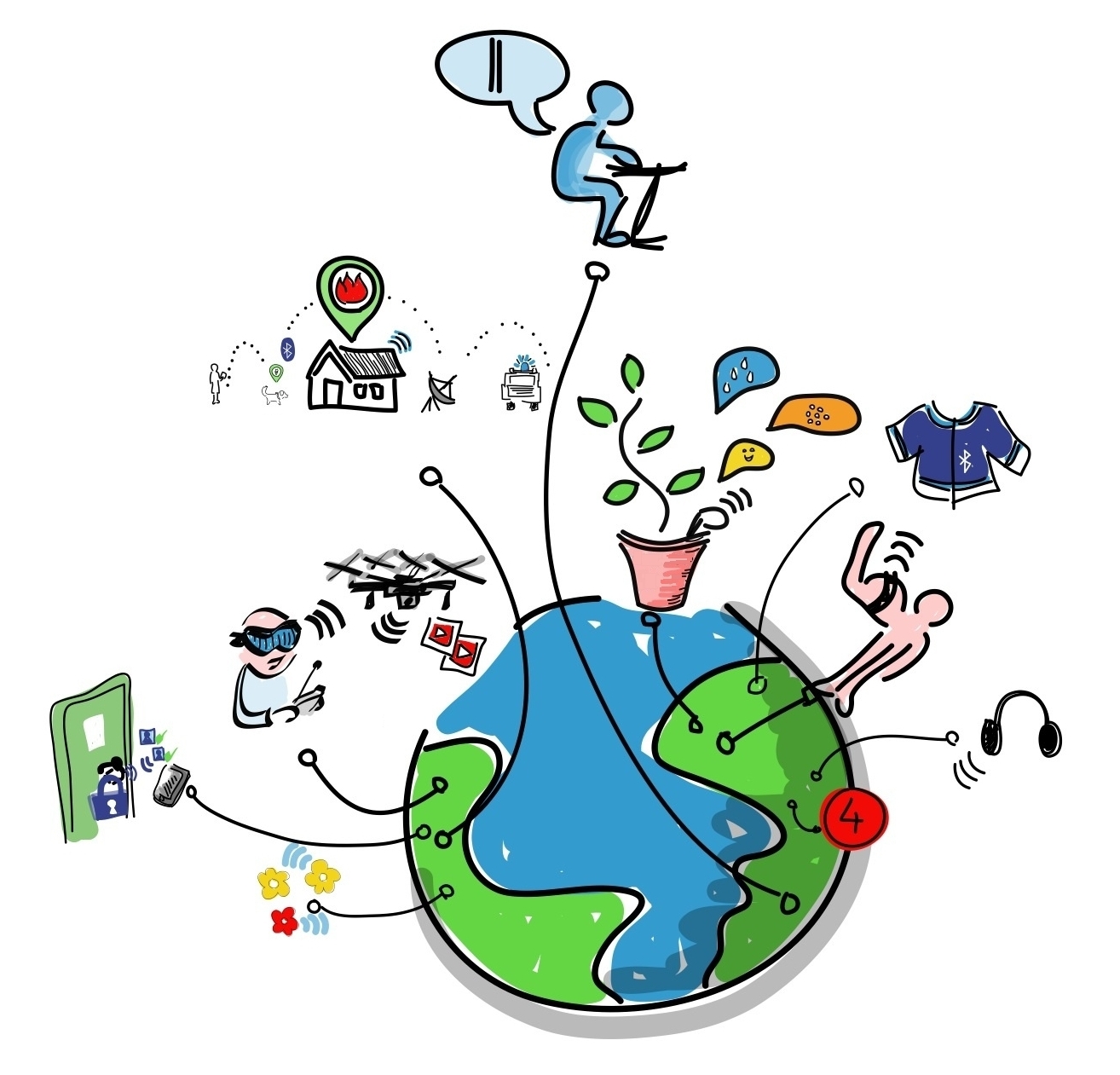
The Internet of Things - you are such a thing

You may have heard a little about The Internet of Things, or not. You will however start to realise that you are one of those things. And those things are many...
The Internet may have been around in it's most basic form since 1969 though it was not until the launch of the World Wide Web and the wide spread use of email that use of the internet became common place. Since then a bewildering set of useful applications and systems have been built on the top of the Internet Protocol or IP for short; mobile apps, interactive maps, smart phones and video streaming to name but a few. IP has been incredibly useful, so useful that we constantly need to revise the expansion of the network and allocate new capacity across the system. It's constantly tempting to think that the growth of the internet is at least slowing down. Social media growth appears to have slowed itself down now.
Wiki Commons licence 
Though each time we assume things will settle down off pops a new popular usage. The latest massive expansion is the internet's takeover of television etc. Services such as NetFlix and YouTube are simply big pointers in a video streaming revolution that is changing entertainment, education and communication industries. TVs are in other words now part of the internet in just same way as phones, computers and gaming consoles.
Though if you stop and observe the Internet landscape you'll see that books (eBook readers), cars (onboard navigation), tickets (electronic transport and entry tickets), toys (networked action figures), credit cards (PayWave systems) are increasingly part of the Internet. All of this on top of an array of identification systems like passports, drivers licences, toll roads and access passes etc. Though too we may realise that our news, sport and entertainment are already deeply part of the internet. Every article you read or view or listen to are on the net and when you consume them your profile is attached to the internet in much the same way as you are tagged in a photo on social media.
Many people are tracking their health and activity using fitness loggers and smart watches, these too connect to the internet.
You may now begin to feel that you are indeed a central part of the internet, though of course all these things that you are connected to don't really need you to work. They talk to each other without you! Your viewing statistics of a particular genre of YouTube cat videos does not need you to inform advertisers to suggest cute products that you are likely to purchase next time you are in the supermarket. This is metadata and it's potential of being used is quiet extraordinary.
In the deep end of The Internet of Things there are particularly more sophisticated things happening than I've mentioned here. Specialised sensors, devices of all sorts and databases are all being connected to each other over the Internet. Indeed if you can imagine a use, it's probably been or being done. Imagine too how you can be part of this evolution.
The Internet of Things has included you some time ago, it maybe time to start wising up to how you may want to include it :)


Tuesday, January 6, 2015

Why search engines are still better than social media

We're all familiar with search engines like Google, Bing, Yahoo or Baidu if you read Chinese. Though Social Media seems to be so much more in vogue. Social interactions and chat are after-all naturally compelling.

Though searching for things is increasingly important in the ever expanding web. Indeed the idea of searching or looking for something has become a necessary part of most modern activities.
Teachers and students 'search' when researching subjects, Journalists 'search' when drafting an article, police search when looking for criminals.  Shoppers 'search' when checking out prices and products. Everyone who's ever been on the internet searches for things, ideas, locations or histories.  Looking around is a natural extension of curious nature.
I like to think of social media as a top level activity, it's wonderful for brand building, customer feedback and research into what competitors are saying. Indeed Social Media is great once you've acquired a customer to keep them engaged with your brand. Though you'll also notice that Social Media platforms are pretty poor at search specific items or companies. Instead it's our collective habit to follow the opinions of friends and some of their associated friends.
Search on the other hand is a validating process for most people. Whether it be a new pair of shoes or and industrial item we are increasingly being active in our research. Geographical searching via Google maps is indeed one of the most popular of Google's search platforms when buying food and larger or more expensive household goods.

Tuesday, October 7, 2014

Egypt to eBooks - the digital evolution


Like a rising digital tide of change we wonder why? We all know the digital evolution of business and social life is upon us, lapping at our feet. The incredible changes are now too numerous to mention without sounding like platitudes. Though last month's announcements by Apple of their Apple watch device and platform beg the question: How did we get to this 'hyper-evolution' in the digital space?

From Egypt to eBooks

It's not yet a commonly held view, though I believe the digital society started hundreds of years ago. At least with the first printing press and by extension a few thousand years before that in our social desire to trade things; a trade in ideas, goods and services. For example it is relatively straight forward to argue that the great library of Alexandria in Egypt 2300 years ago functioned the same way as today's giant server parks that host millions of databases and websites.

Access back then was for the privileged few who had the right credentials, could travel, read and make sense of the scrolls. Access today is via an internet link at home, at work or at school via a revolutionary interface tool called the world wide web.

The hunger for knowledge has always been there, in hearts and minds of children, women and men. The difference now is, most people can read, most of us now have access to knowledge and most of us don't need to physically travel to get it. Indeed most of us don't need to ask permission from anyone to access it. Together these factors create perfect conditions for people to quench their thirst for knowledge. A thirst that has been with us for millennia.

Today what we experience as digital hyper-evolution is simply an acceleration of access to knowledge. We are in other words just following our natural desire to attempt to understand the world in a hope of making our lives better.

It would appear an adjustment in thinking is well over due if we are to make sense of the rising tide. A tide that is perfectly normal when seen in a historical context.


Friday, May 16, 2014

CEBIT 2014 Digital Business report

Australia’s largest and most respected IT conference and expo CEBIT has morphed from a tech industry meet-up to a true digital business/economy event. This year’s CEBIT conference marked their transformation by moving west from Sydney’s Exhibition centre in Darling Harbour to Homebush the home of the successful 2000 Olympics. The move has re-energised the event, now in its 13th year. A revamped offering over 3 days was more about innovation and facilitating business than just geek tech.


Travelling out to Homebush by car was an unnecessary luxury as the train ticket was included in the entry, ( a nice touch and a vote of confidence in the event from the NSW government). My fellow traveller was a prominent business publisher and he’d just taken charge of a wonderful new car from Mercedes. The car has so much technology crammed into it I quickly became his onboard technology advisor.


Belkin, a Central Coast based company greeted us when entering the substantial expo hall. They were promoting their new range of Smart Home technologies; automated networking of all things electrical in the home/office. The pricing points for these once very expensive items are now incredibly digestible and worth a close look.


Beyond the big company stands there was an impressive array of foreign trade stands from China, Germany, India and the UK. Though it was the crafty New Zealanders from Wellington that had the best pitch to my mind. The aspiring Tech City of Wellington had dragged over a bunch of fun business people to talk up their city and NZ as a whole. A mix of good business data, coffee, food and cheeky personalities was winning people over, me included. Wellington fell short on only one count, fibre optic broadband. Something I bragged Gosford had over them. Of course they quickly replied that they were onto it and a full fibre optic rollout to all premises was well on the way.


The conference side of the event was as thorough as always, with so called Big Data, eHealth, Cloud, Mobility and Cyber Security the main lecture themes. Though Paul Budde’s bite sized info sessions proved most popular. Paul heads a Central Coast based global telecommunications consultancy Budde.com which has become a hallmark of CEBIT Australia over the last decade. His experience from around the world helps frame the Australian version of the CEBIT global franchise.


Close to my heart was a fun new concept this year. As startup’s have been on everyone’s lips this year, CEBIT revamped and expanded it’s fun ‘StartUp Alley’ concept. Almost 100 startup projects were present providing the quirky energy and pizzazz that tech expos usually lack. There was a wide range of new concepts waving their idea flags in the wind, all of whom later competed at a pitch fest event. One of the winners was a mob called MathsSpace, that is evolving the teaching of complex mathematics concepts in a very cool and engaging way. Though most of all the Startup alley bought new faces to the event, many young people of course, though notable were less tech looking experienced old hands and most encouraging many more entrepreneurial women.


An honorable mention to the University of Newcastle who were out in force again with their micro robotics students, a specialisation that the UoN are gaining a global reputation for. Their Nubots program was most popular with the crowd. Nubots are programmable 1 foot high robots that can do many things, among other things play football (watch out CC Mariners).


3D printing exhibitors were there in full force. This technology is evolving rapidly and is fast becoming mainstream. The sophistication of items that can be printed now is incredible; bones, complex tools and industrial spare parts among them. The price points for the machines has dropped incredibly and range from a few thousand dollars for basic machines to just $60k for incredibly sophisticated industrial units.
The opportunities these technologies represent to revitalise local manufacturing should not be under-estimated.


CEBIT Australia is now well underway to evolving into the “must visit” event on the Australian/Pacific digital business calendar. I was informed by an insider of the parent company in Hanover, Germany that the Australian franchise, started by Jacquie Taranto is seen as the innovation leader in it’s field. That’s saying something, as if you’ve ever had the pleasure of visiting CEBIT Europe it is a mighty tough gig to beat the Germans at their own expo game.


“Digital” Dave Abrahams
@digitdave

This article appeared in the Central Coast Business Review & on ABC Central Coast Radio 92.5

Wednesday, April 2, 2014

Journalists & wordsmiths need to learn video or perish

Remember when the world wide web was an amazing opportunity for businesses to connect with customers directly. The web promised to cut out the media outlets and business directories by beating a direct path to your customers' hearts, via their wallets and credit cards. Them were heady days. Of course reality was a little more complex than the promise. The web subsequently flourished with enough text to fill a battle ship. Wordsmithing become a seriously important part of creating quality online content. It still is.
Today's communication world is full of online content; images, memes, audio and increasingly video footage.
The growth in video delivered to mobile devices 
People are now overwhelmingly looking to video for their information, entertainment and education needs. The graph below compiled by BI Intelligence illustrates the real and projected growth of mobile global video traffic.
Quiet apart from the infrastructure needed to carry all this data traffic we need to be thinking of ways to quickly produce quality audio and video content that is fit for purpose. 
To be effective, video needs to be put in context and narrowcast to the intended audience quickly and with little fuss. Easily said, difficult to execute. 

The skills required to produce a quality short video are quiet different to those of creating quality written content. Quality written content has a long history, it's taught at schools all over the world in all languages. Arguably most established cultures are founded on the written word. It is the thoughtful producers that build the respect of their readers. Those wordsmiths now need to turn their insightful training to producing video if they are to maintain their relevance. 

Creating video will be a challenge to many. Lighting, audio and articulation skills are all part of the equation. Though more importantly the quality of the story is what will help you get noticed in an increasingly noisy media landscape.

NB: Our research shows that inserting a short video into a blog such as this greatly increases the views that a blog receives. Grab your phone, make a YouTube video and give it a test yourself. 
Dave Abrahams, Principal Consultant OI, Organise Internet 

Monday, November 11, 2013

Lorde: A Weather Vane for Social Media Culture

A 16 year old New Zealander, Lorde has shot to unprecedented popularity in the global music race recently, topping the US & UK charts. She's a phenomenon that may be a much broader weather vane, signalling a wind of change in the online world. Challenging one of the founding tenements of the current pack of social media platforms; love of self. If so, teenagers like Lorde will again lead change as in the 50s & 60s.

There is evidence in Lorde's poetic song texts that indeed she may be heralding a major shift in our explosive interest in self focussed social media. If the popularity of of her online downloads and messaging is anything to go by this young woman may have pointed out one of those great shifts in online behaviour. One towards a desire for a more constructive, collaborative online reality.

Image of Lorde
Lorde. A weather vane? Pic by Thatboyrion

Lorde, AKA Ella Yelich-O'Connor is a particularly astute representative of her generation, in her own words she's no white teeth teen. A lover of poetry thanks to her mother and of music thanks to her father seems to have provided the ideal environment for a positive artistic questioning of the popular paradigm.

Her first & incredibly popular album named the double entendre 'Pure Heroine' is laced with strong subtexts that the(her) digitally native generation is tiring of looking at glam bang social media posts & ads.
Forbes magazine journalist Liv Buli (@lbuli), a specialist in online data analysis of the music industry published a revealing insight into Lorde's popularity last month in @Forbes. In it she cites an explosive weekly download from Sound Cloud of 825,000 for one song on the album Royals. A song with a strong generational critique of contemporary glamour culture with words like ".. That love just ain't for us, we crave a different kind of buzz" and "My friends and I have cracked the code". There seems to be an emerging commitment to working together for something more real, more satisfying in her texts.

Maybe her prophetic words "We're on each other's team" is a deeper cry for people to work together collaboratively rather than endlessly shout and brag to each other through contemporary social media sites.

Whether her honest observational song lines are game changing influences like Bill Haley's '54 recording of Rock Around the Clock is a matter for the future, Lorde's early popularity suggests she may very well be. It is possible that in being supercharged by today's internet world, her change could be more influential and spread more quickly than in the 50s & 60s.

The internet with it's ability to connect people together certainly can spread cultural change quicker than at other times in history. The internet constantly seems to surprise us. Who would have imagined a FaceBook or a YouTube being a billion people strong in such a short time. Or that Social Media would be a part of national revolutions. Though pretending that the online world will always look the way it does at the moment is foolhardy at best.
Lorde's "I'm kinda over being told to throw my hands up in the air" and "all my fake friends and all of their noise" or "Maybe the internet raised us" taps into a feeling for change in the way teenagers perceive things. Perhaps in much the way teenagers of the 60s used the music of their age to change the prevailing culture.

If the seeds of change are germinating online we should not expect to predict it with specifics. Instead we should be ready for the change by reading the shifting winds, expecting to find the signs in unusual places. Perhaps in the musical poetry from teenagers is a place to keep an eye on.

I'm not sure of the exactness of the sort of changes that will happen, yet there's a sense of a new examination of reality and how the internet can help better reflect that. It's early days, though research & development that OI's been conducting point to a desire emerging of a more collaborative context. A context that creates a more satisfying online reality. Granted a new reality may seem impossibly small as I write. The all consuming strength of FaceBook, YouTube & Twitter are pervasive.

To paraphrase Lorde's song Still Sane "I maybe little but I'm coming for the crowd". That crowd may very well be turning toward a renewed online reality as her songs suggest. If that is the case we've all got a lot to look forward to from her generation and the online tools that they will use.

In the mean time download and/or listen to Pure Heroine

Dave Abrahams
@digitdave - @OrganiseInt

5M4GBK7NY8T5
© Copyright Organise Internet