Thursday, April 23, 2015

Be Mobile Friendly or Disappear ? Not entirely


There's been much talk about 'Mobilgeddon' and the new Google rankings adjustment that will rank mobile friendly websites higher than sites that don't render well on mobile devices.

The official Google blog in Australia points out that ranking is made up of approximately 200 factors about your website, not just the ability of mobile users to view your website well. Having said that Google will be ranking websites that are mobile friendly higher than those that do not render for mobile phones for mobile searches. Fair enough, I'd certainly like to have a site that is touch screen and thumb friendly when I'm on my mobile. Google is at pains to remind people that these changes won't affect search rankings on traditional computers.


If ranking is a big deal for your business, you're probably already aware of these changes and have completed the transition to a mobile friendly platform. If not, now's the time to get moving. There are two main ways of achieving this: The first is to entirely redesign your website in a what's called a 'responsive' framework. The second is to create a separate site for mobiles and if necessary create a redirect to the mobile site. Google accepts both ways as legitimate. The first method is a bigger job and suits businesses that where going to upgrade anyway. The second is a quick and effective way to maintain your ranking.

Use this official Google tool to check out how mobile friendly your existing site is. Check here.

Despite all this 'formatting' discussion, our experience is that regular, interesting and relevant content is the best way to boost your website's rankings, and Google would say; a little Adwords advertising helps too :)

Wednesday, March 25, 2015

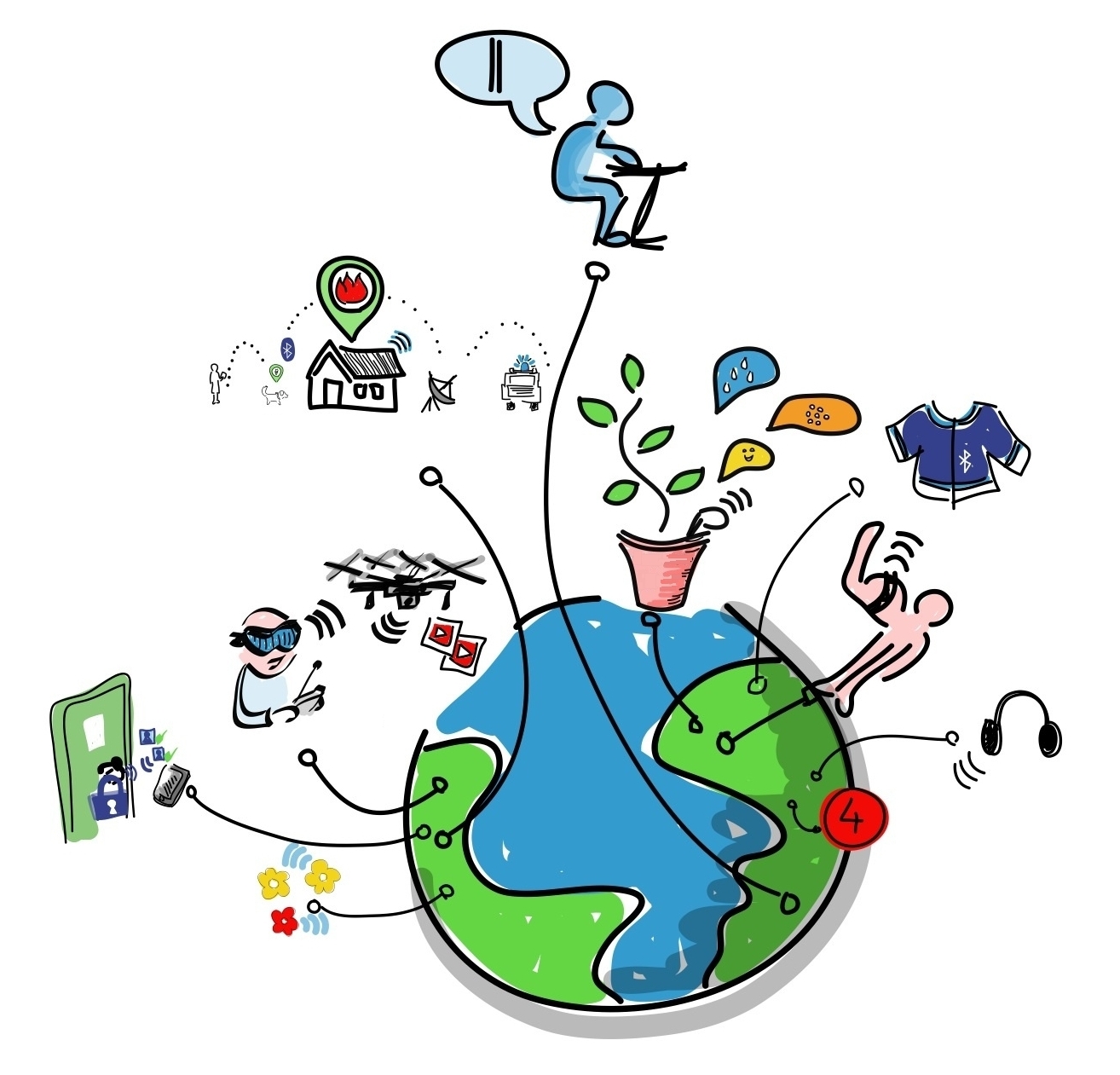
The Internet of Things - you are such a thing

You may have heard a little about The Internet of Things, or not. You will however start to realise that you are one of those things. And those things are many...
The Internet may have been around in it's most basic form since 1969 though it was not until the launch of the World Wide Web and the wide spread use of email that use of the internet became common place. Since then a bewildering set of useful applications and systems have been built on the top of the Internet Protocol or IP for short; mobile apps, interactive maps, smart phones and video streaming to name but a few. IP has been incredibly useful, so useful that we constantly need to revise the expansion of the network and allocate new capacity across the system. It's constantly tempting to think that the growth of the internet is at least slowing down. Social media growth appears to have slowed itself down now.
Wiki Commons licence 
Though each time we assume things will settle down off pops a new popular usage. The latest massive expansion is the internet's takeover of television etc. Services such as NetFlix and YouTube are simply big pointers in a video streaming revolution that is changing entertainment, education and communication industries. TVs are in other words now part of the internet in just same way as phones, computers and gaming consoles.
Though if you stop and observe the Internet landscape you'll see that books (eBook readers), cars (onboard navigation), tickets (electronic transport and entry tickets), toys (networked action figures), credit cards (PayWave systems) are increasingly part of the Internet. All of this on top of an array of identification systems like passports, drivers licences, toll roads and access passes etc. Though too we may realise that our news, sport and entertainment are already deeply part of the internet. Every article you read or view or listen to are on the net and when you consume them your profile is attached to the internet in much the same way as you are tagged in a photo on social media.
Many people are tracking their health and activity using fitness loggers and smart watches, these too connect to the internet.
You may now begin to feel that you are indeed a central part of the internet, though of course all these things that you are connected to don't really need you to work. They talk to each other without you! Your viewing statistics of a particular genre of YouTube cat videos does not need you to inform advertisers to suggest cute products that you are likely to purchase next time you are in the supermarket. This is metadata and it's potential of being used is quiet extraordinary.
In the deep end of The Internet of Things there are particularly more sophisticated things happening than I've mentioned here. Specialised sensors, devices of all sorts and databases are all being connected to each other over the Internet. Indeed if you can imagine a use, it's probably been or being done. Imagine too how you can be part of this evolution.
The Internet of Things has included you some time ago, it maybe time to start wising up to how you may want to include it :)


Tuesday, January 6, 2015

Why search engines are still better than social media

We're all familiar with search engines like Google, Bing, Yahoo or Baidu if you read Chinese. Though Social Media seems to be so much more in vogue. Social interactions and chat are after-all naturally compelling.

Though searching for things is increasingly important in the ever expanding web. Indeed the idea of searching or looking for something has become a necessary part of most modern activities.
Teachers and students 'search' when researching subjects, Journalists 'search' when drafting an article, police search when looking for criminals.  Shoppers 'search' when checking out prices and products. Everyone who's ever been on the internet searches for things, ideas, locations or histories.  Looking around is a natural extension of curious nature.
I like to think of social media as a top level activity, it's wonderful for brand building, customer feedback and research into what competitors are saying. Indeed Social Media is great once you've acquired a customer to keep them engaged with your brand. Though you'll also notice that Social Media platforms are pretty poor at search specific items or companies. Instead it's our collective habit to follow the opinions of friends and some of their associated friends.
Search on the other hand is a validating process for most people. Whether it be a new pair of shoes or and industrial item we are increasingly being active in our research. Geographical searching via Google maps is indeed one of the most popular of Google's search platforms when buying food and larger or more expensive household goods.

Wednesday, November 5, 2014

Gigabit Internet - building the future

Gigabit Cities, Towns & Regions.


Picture a youngster in the future, stooped over a laptop in the back room of a disused shop in a long forgotten country town. Coffee cups, half eaten pastries and the faint smell of last night’s alcohol fills the air. A sad dystopian image so far, but look a little closer.
He’s but one of a dozen people sitting or standing around various bits of old and new furniture. The walls are covered in ultra thin screens, windows into other teams in other parts of the world; China, the US, Norway & Brazil. They’re all working together on something or other, something global, something significantly big. Many languages are being spoken and simultaneously translated in real time. Videos make up part of presentations, audio is being composed to fit, financial documents embedded in the project.
All happening seamlessly, no delays, no pixelation, no distortion no waiting for files to transfer. The sound quality is perfect, the discussion is natural, this is the future of work. And it is entirely built around ultra fast gigabit networks.
All this should not entirely be unexpected, the internet after all has been growing in usage, speed and capacity at an astonishing rate since it became widely commercially available in the early 1990s.


The internet is the backbone of all mobile phone usage, all fixed line usage, increasingly most of radio, TV and movie transmission. Almost all of the worlds financial transactions now occur over the internet and a large part of humanity use it for most of their social and professional communications. Profession after profession is being disrupted and reconstructed in ways that few had seen coming. From education to medicine to shopping and defence, indeed government and governing is slowly being changed by the power of the ubiquitous and always connected world. It is an unstoppable force, fuelled by our collective desire to re-imagine the future in a massively online world. A true wave of change is upon us. Some will ride this powerful wave, others may resist it, others may simply be submerged by it.


It is in this backdrop that a future certainty can be brought into focus. Many opportunities for growth will no doubt be there for those that connect, collaborate and adapt.
One thing is certain though, the faster, more scalable and more reliable our networks are the more opportunities for growth there will be. Gigabit networks will release and liberate wealth, health and wellbeing wherever they are found. In other words the prosperous places of the future will be gigabit enabled cities, towns, regions and nations. It really is that simple and it has started happening now.

Text extract from a speech given to the Fabian Society in Sydney by Dave Abrahams in 2014 - Copyright. Follow the author on Twitter @digitdave
...
Video is a Mashup from the Google Fibre project.

© Copyright Organise Internet